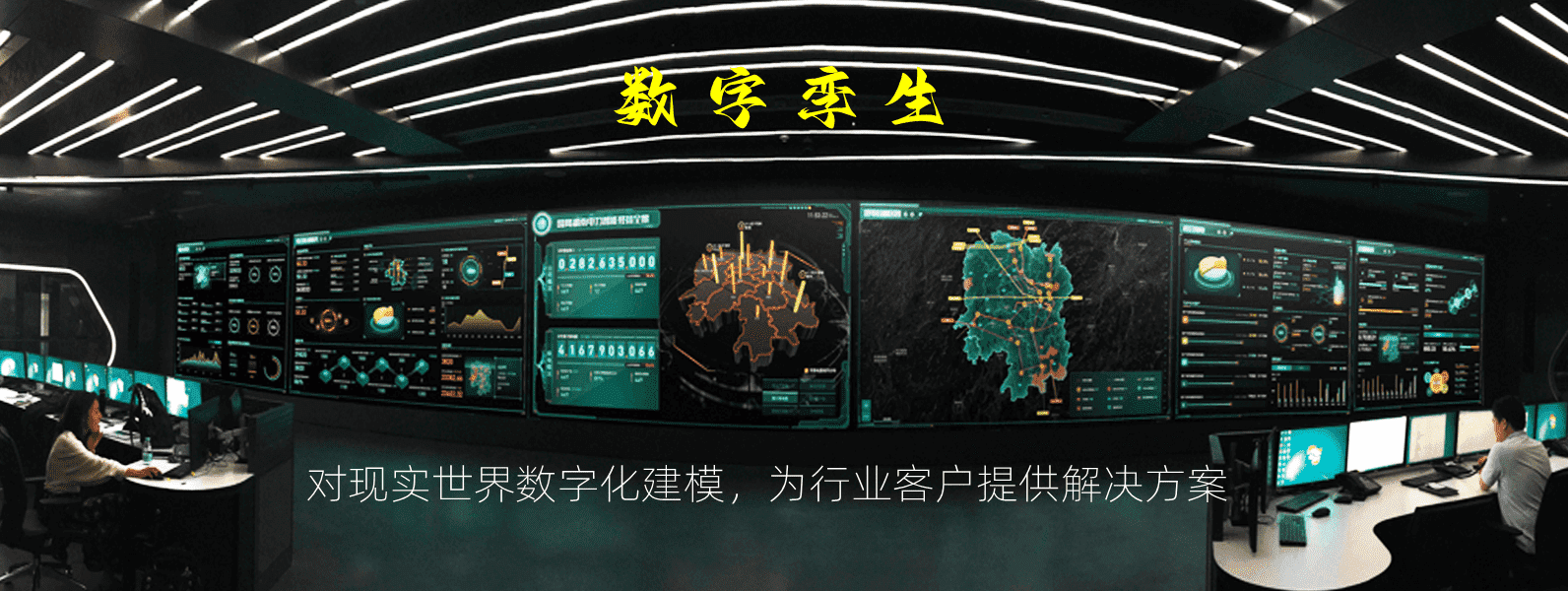
With the continuous development and deepening application of IT technologies such as cloud computing, the Internet of Things, and big data, as well as intelligent technologies such as artificial intelligence and machine learning, various industries are implementing and accelerating the construction of a strong manufacturing country, accelerating the development of advanced manufacturing industries, and promoting the deep integration of the Internet, big data, artificial intelligence, and the real economy. Digital transformation will promote product development and innovation throughout the entire process of product design, process, manufacturing, testing, delivery, and operation and maintenance through the integration of digital technology and industrial technology. Digital twinning, as an important supporting theory and technology, has received more attention and recognition.
一、The Concept and Development of Digital Twins
Digital prototype is the initial form of digital twins. The concept of digital prototype is a digital description of a complete mechanical product or a subsystem with * * functions. This description reflects the geometric attributes of the product object, as well as the functional and performance characteristics of the product. In industrial practice, digital prototypes are first defined as digital product definitions (DPD) during the design phase, expressing product design information through DPD and constructing digital models that represent physical objects.
Digital twins are virtual models of physical entities created in a digital manner, using data to simulate their behavior in the real environment. Through methods such as virtual and real interaction feedback, data fusion analysis, and decision iteration optimization, new capabilities are added or expanded for physical entities. As a technology that fully utilizes models, data, intelligence, and integrates multiple disciplines, Digital Twin is oriented towards the entire product lifecycle process, serving as a bridge and link between the physical world and the information world, providing more real-time, efficient, and intelligent services. From this, it can be seen that digital twins have become the general term for any information or digital system.
二、Digital Twin Capability Model
When considering digital twins as the digital representation of real-world entities or systems, more emphasis is placed on architecture driven, model driven, data driven, and virtual real fusion requirements. To this end, a five dimensional capability model of "definition, presentation, interaction, service, and evolution" for digital twins is established from the perspective of process evolution. Among them, data is the foundation of the entire capability model, and the five major capabilities revolve around data to play a role and effectiveness.
The display ability of digital twins requires the display of dynamic and static content of objects defined in the digital space. Static content includes object attributes, methods, behavior related data, and their associations. Dynamic content dynamically, quickly, and accurately displays real-time or quasi real-time variable information according to the needs of object visualization, ultimately achieving high fidelity, high precision, and high dynamic information display, providing a means for more scientific understanding of physical objects.
Interaction ability is a key characteristic of digital twins that sets them apart from traditional information systems and digital applications. The digital twin achieves dynamic interaction with the physical world through various sensing devices or terminals. With the ability to interact dynamically, it connects the physical world with the digital world as a whole, resulting in the digital twin being able to obtain real-time and accurate information about physical objects. The digital twin performs real-time calculations and analysis based on the defined model and object information, and feeds back the analysis results to the physical object, Provide information reference for the execution of physical objects, or provide decision support for corresponding personnel, so as to more accurately, timely, and objectively grasp the state of objects and further enhance the coupling efficiency with physical objects.
三、Key Application Technologies of Digital Twins
Software Architecture Technology
Full set data management technology, dynamic modeling and model driven technology
Efficient data analysis and calculation technology and precise service technology
Immersive Experience Technology with Virtual and Real Integration
Digital Twin Core Technology for Full Industry Chain Service Solutions